
Flower business · Miami
Why America Buys Its Flowers Through Miami
Next time you buy flowers, take a slightly closer look at them. Here is an ordinary rose. You chose it, paid for it, gave it to someone. But where was it growing just a few days ago? And how many people managed to make money from it before it ended up in your hands?
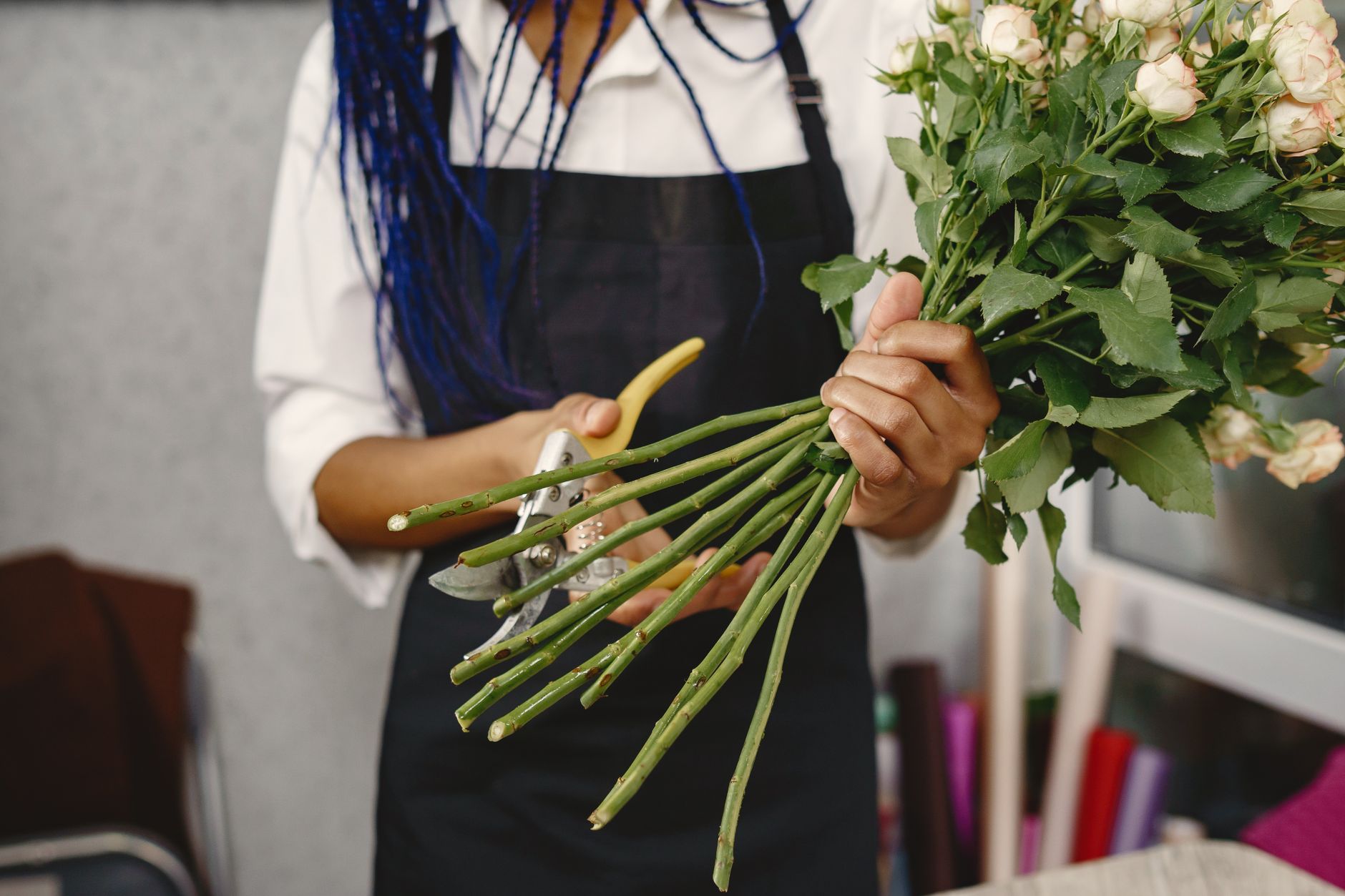
Fresh roses, close up. Photo: Денис Ладика / Pexels
Miami has an unexpected role in this story. We are used to people flying here for beaches and vacations. But flowers for a huge part of America are flown here too. A bouquet someone hands to their mother thousands of miles from Florida may very well have first passed through our airport.
Now look at the little flower shop in your neighborhood. A few vases, a cooler, a person putting together a bouquet. It seems as if something very small is happening here. But this is exactly where international freight turns into a gift, and flowers from a wholesale box become a wedding arrangement that costs almost a thousand dollars.
Let's follow that path. How Miami ended up in the middle, where the small business makes its money here, and why this whole enormous industry depends on whether one person manages to deliver your bouquet by six in the evening.
Because flowers have one special feature: while everyone in this chain is trying to make money, the thing they are selling is slowly wilting. The flower is cut. The countdown has started.
And around this short span between the greenhouse and your vase, a huge industry has grown. With cargo planes, refrigerated warehouses, laboratories, and trucks that carry flowers across the country. Miami has become one of the main places in this system.
According to the airport, in 2025 flowers worth $1.8 billion were imported here.
And here is what is interesting: being next to that flow does not mean you make money. Flowers are available to all your competitors. They stand at wholesalers, sit in boxes, get sold in supermarkets. But one person sells an armful of stems, another sells a bouquet subscription, and a third gets an order to decorate a wedding where a single table arrangement can cost almost a thousand dollars.
Let's start with why the planes flew here at all.
In 1967, a student named David Cheever wrote a paper on growing flowers in the Bogotá area. He noticed a fortunate combination: an even climate, steady light, and a relatively short flight to Miami.
Instead of leaving the paper in a university archive, he decided to test the idea with his own money. Cheever and three partners put $25,000 each into Floramérica. The first planting of carnations was timed for Mother's Day 1970.
Think about the idea itself. You grow a flower in one country, cut it, pack it, send it by plane to another country—and count on all of that making economic sense.
The venture worked. Floramérica became one of the businesses that showed the scale of what that kind of export could become.
Cheever himself soon lost his place in the company. As he told Smithsonian magazine, after disagreements with his partners he was pushed out in the summer of 1971. Later he kept working with carnations, but in other businesses of his own.
A man helped open up a possibility that others then used. But for our bouquet, the more important thing is the consequence: the distance between the place where flowers were grown and the place where they were sold stopped being an insurmountable obstacle.
It created work for an entire chain of companies.
This is where Miami got its role. According to the airport, 91 percent of the flowers the United States imports by air pass through it. So a bouquet given far from Florida may very well have been here first.
We usually picture the flower business as a small room with a pretty sign. Behind the glass are vases; someone with pruning shears is adjusting a ribbon. But before that person touches a rose, another Miami has already done its work on it—the cargo Miami.
There, flight schedules, warehouse space, documents, and temperature matter. Flowers are inspected for pests. Suspicious finds may be sent to a lab for identification. Border officials explain the point of this work simply: with the plants, the country cannot let in something that will later damage American agriculture.
Your gift has a rather unexpected stop on its way to the recipient. Someone checks it so that a problem for farmers does not arrive in the country along with the congratulations.

Then the flowers are distributed farther. Reports on the local industry describe how, from South Florida, they move in refrigerated trucks to wholesalers, shops, and other buyers.
At every stage, there is a fight for the time that remains.
With ordinary goods, a delay often means they will be sold later. With flowers, it works worse. While the owner waits for a good buyer, the inventory can get worse right before their eyes.
But now the shipment has arrived. The flowers are with the local seller. Now the next problem begins: who needs them?
The answer seems obvious. Everyone. For a birthday, an anniversary, a date, a wedding. Only between "people buy flowers" and "people buy flowers from me" lies the whole of small business.
Juan Palacio began looking for his customers in Miami Beach hotels. Originally from Colombia, he went from hotel to hotel offering flowers. He later said in interviews that some places had none at all, while in others the arrangements struck him as poorly done. He saw an opening and used his contacts in Colombia.
That is a very concrete way to find a market. Not by looking at humanity's general love of roses, but by walking into a specific building and noticing what you can offer there.
A hotel sells lodging. But a guest judges it before he lies down on the bed. He passes through the entrance, the front desk, the common spaces. The people who decorate those spaces get a customer of their own.
That is how a small supplier can plug into the big hotel business without owning a single room.
Over time, Palacio worked with flower shops and online sales. And the next idea came to him from a completely different industry: cosmetics.
He learned about Birchbox: people subscribed and regularly received a box of beauty products. They did not know the exact contents in advance. They were also buying the pleasure of the next box.
In 2015, Palacio launched BloomsyBox—flowers by subscription.
Here, the very reason for buying changes.
An ordinary flower shop often needs an occasion in your life. Someone was born, got married, fell ill, is celebrating an anniversary. You have to remember, choose, order.
A subscription lets you make the decision once: I want flowers to appear regularly.
On the BloomsyBox page we checked, the monthly "Original" plan cost about $60, with advertised free shipping. It is the familiar logic of a recurring service, only instead of access to movies, a person gets a new bouquet delivered.
Of course, every next box still has to be assembled and delivered. But the entrepreneur gets a chance to build a relationship with the buyer that lasts longer than one holiday.
For the flower business, this is an especially interesting answer to the nature of its own product. A bouquet does not last. A subscription turns its replacement into an event organized in advance.
And yet that model does not take over the whole market.
Because one day the customer will not need a box of flowers at home. He will need a wedding.
In Westchester, a Miami neighborhood, in 1984, a woman named Nery decided to handle the flowers for her daughter's wedding herself. The budget was limited.
According to the family history of Nery's Flowers, guests liked the result and began recommending her for other events. That was how a company appeared that now tells the story of three generations of women in the family business.
An attempt not to pay someone else's florist turned into a job of her own.
It is a small episode, but it explains a lot. That first wedding also became a demonstration of what Nery could do. Future clients saw the finished result in a real hall, at a real celebration.
There was no need to explain the service from scratch. People could say: "I want ours to be just as beautiful."
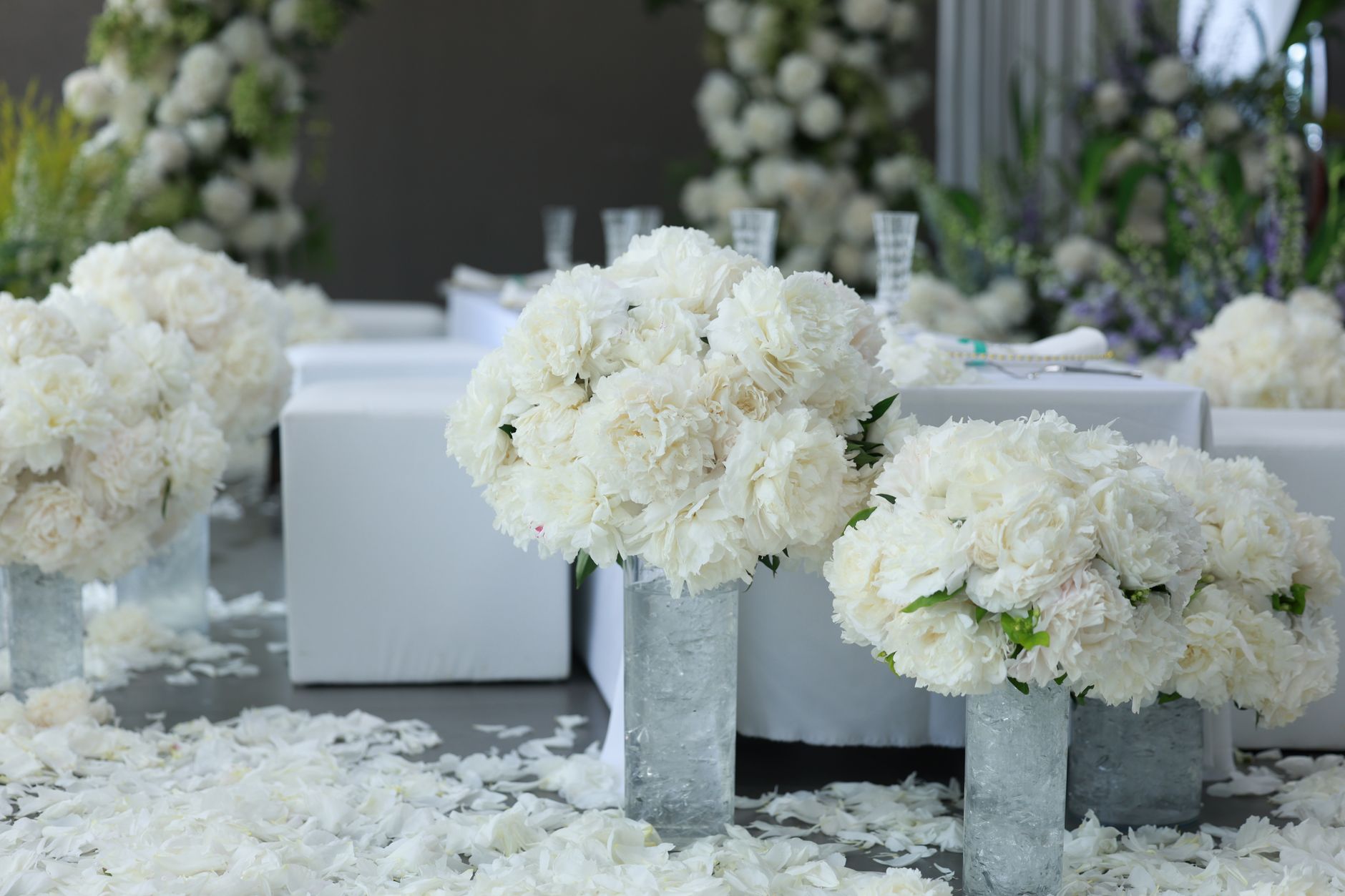
Today the company's website lists a wide range of prices for table arrangements: $75 to $950.
Almost a thousand dollars for one arrangement on a table.
If there are ten tables in the room, just ten arrangements at the top end already come to $9,500. Not the whole wedding. Just this one element of the décor—and at the most expensive end of the published range.
And at this point it is easy to get indignant: what could possibly cost so much if flowers come into Miami in enormous batches?
But the client is ordering a certain look for the entire event. It matters how the arrangements look together, what is visible from the entrance, whether they get in guests' way, whether the result matches the design that was agreed on.
On its page, the company lists flower selection, preparation, materials, staff labor, coordination, delivery, and pickup. Vases and candleholders are usually rented.
The guests have already gone home, the party is over, and for the vendor the order may still be underway: the equipment has to be collected.
That is why a wedding florist sells work with a hard deadline and almost no room to reschedule the result.
You can be late delivering a new shelf. That is unpleasant, but tomorrow the shelf is still needed.
A wedding arrangement delivered the morning after the wedding has lost the main part of its value.
That precision is part of what people pay for.
And that is why a small studio can lose even if it has beautiful work and plenty of people who want to order. If it has promised more than its people can do, the flowers will not set themselves up in the halls.
The big economy delivered the raw material to the city. The last few hours before the event depend on a small team.
And even the events themselves can disappear.
In Doral, the family company My Divine Decors is at work. Its founders, Jessica Nunez and Nelson Ramirez, say they met while working at Pizza Hut. He gave her roses. She took the bouquets he gave her apart and put them back together.
Later they opened a flower shop. By the start of the pandemic, cruise orders had become part of their work.
And then the cruises stopped.
For a supplier, that means a familiar customer suddenly stops needing a familiar service. You can do your work beautifully—and still be left without it.
The owners say get-well arrangements helped them. They made them at home and sent them to people who were sick.
In the same family, in the same business, flowers changed their purpose. Yesterday they accompanied leisure; today they helped convey support.
This is more important than a pretty line about flowers always being needed. Orders do not appear automatically just because a need exists somewhere. You have to see it and be able to serve it.
That is how a flower shop connects big changes with a small human act. An industry stopped—some orders disappeared. People's lives changed—other orders appeared.
And all of this happens with a product that cannot calmly wait while its owner figures things out.
That is why a striking markup on a bouquet still does not explain who is making good money here. What matters is how many flowers actually found a buyer. Everything unsold was also bought, transported, and took up space.
The ability to guess demand here has a very tangible result. A good purchase goes into bouquets. A bad one stays in buckets.
At the same time, the client does not have to buy an expensive arrangement at all. An ordinary supermarket bouquet can do the job perfectly well.
That is what forces local businesses to look for their place.
One shop is convenient because it is on the way. Another knows how to do décor that people come to it for specifically. A third organizes regular deliveries. A fourth takes on an event the customer does not want to manage piece by piece.
They work with similar flowers, but the buyer comes to each for a different result.
That is why Miami's flower economy does not end at the airport. There, a possibility is created: a huge assortment can enter the country and spread farther. And all over the city, small businesses turn that possibility into specific purchases.
The plane does not know that today is your wife's birthday. The wholesale warehouse does not know which shade was chosen for the wedding. The carrier does not know that someone in the hospital wants to receive something from their family.
The person who takes the last order finds that out.
That person in the small room with vases, pruning shears, and a phone that never stops ringing.
Behind them are international trade, greenhouses, cargo flights, and refrigerated warehouses. In front of them is your message: "Please, by six. It matters."
And in the end, the whole enormous system has to come together in that simple request.
Comments
- DanNovember 14, 2026
🤑😍😍😍
Run a business like this?
Add it to SuVerse — free.
Add your businessOn SuVerse in this area
House of LilacFlorist · Miami, FL 33155FloralineaFlorist · Miami, FL 33133IT IS ROSESFlorist · Miami, FL 33131Sources
- The story of Nery's Flowers
- David Cheever and Floramérica (Smithsonian)
- Flower imports through Miami International Airport
- The journey of the flowers and the agricultural inspection (WLRN / WUWF)
- Trucking out of South Florida (Miami Today)
- Juan Palacio's first sales (FloralDaily)
- Where the subscription idea came from (InsideHook)
- BloomsyBox subscription prices
- Nery's Flowers wedding pricing
- The story of My Divine Decors
Figures come from public sources and sellers’ own listings.
← All stories